Posts filed under 'Betting Tutorial'
GoonersGuide.com provides independant gambling reviews, sports betting tips, previews, and bookmaker odds for club and international games played in Europe.
There are sections for English Premier League, Italian Serie A, UEFA Champions League, Spanish La Liga, German Bundesliga.
US sports are covered with NFL Football and College Football picks online as well.
November 28th, 2009
 Training Camp: From the linesmaker – by the team at popular US-friendly online sportsbook Bodog Sports.
I can’t deny the fact that I’ve got a great job. But it’s not like I spend all day sipping mai-tais and browsing the swimsuit issue. I have to make sure that the betting lines I put up are an accurate reflection of the betting marketplace – one half-point in the wrong direction could take food off my plate.
Some people still think my job is to pull the wool over our customers’ eyes and take their cash. I think the informative articles you’ll find on Bodog Sports prove otherwise. We want our customers to make educated bets so nobody loses his shirt – us included. So let me play the Answer Man for a moment and give you an insight into the nature of what we do around here.
How are game totals set?
It’s common knowledge among bettors that the online gambling industry pays close attention to Las Vegas Sports Consultants, a private company that handles the odds for casinos and newspapers. But the totals I set have to reflect our customers’ preferences for betting the over or under on certain teams in certain situations. Also, because LVSC lines are published early, I have to keep on top of injuries and potential changes in coaching strategy leading up to the game in question before I release any totals. This is doubly important in basketball, where pace determines how many shots will be taken in 48 minutes.
Why do lines move?
Ideally, the lines I release will balance the action equally, so that the winners get paid out from the pockets of the losers and we take the vigorish. That’s an ideal that rarely happens – especially in sports without a pointspread, like NASCAR and golf. If Team A is getting too much action, I’ll move the line toward Team B to try to achieve that balance. My personal preference is to tweak the vig from –110 to –105 or +100 before taking the bigger step of moving the spread a half-point or more.
Are there ways to make money from line movements?
Absolutely. When the lines go up for the NFL, or for the first game of the NCAA men’s basketball tournament, there are several days in between the open and the game itself where movement can take place. You’ll find that the betting public tends to pile in on their favorite teams once they get home from work on Friday. You can anticipate these line movements and time your bet accordingly to take advantage.
Sometimes a line will move far enough to create a “middle” opportunity. Say the Texas Longhorns end up facing the Wisconsin Badgers in the first round of March Madness. If you have Texas early as a 5-point favorite, and I move the line to Texas –7 later in the week, then you can also place a bet on Wisconsin +7. If Texas happens to win by six points, both your bets cash in. Texas winning by either five or seven gives you a win and a push. Any other result creates a win and a loss, so you’re only risking the vigorish.
What type of betting statistics do you recommend?
If you want to predict what will happen when Team A meets Team B, your best stats to analyze are those generated in their most recent head-to-head matchups at the same venue. The habits of the betting public are fairly constant, so ATS results in general have a longer shelf life, but don’t bother going too far back in time. The 2009 New York Yankees are going to look a lot different than the 2008 Yankees or the 2000 Yankees.
Do multiple deposits count toward special promotion offers?
Yes. If you receive a special offer from our marketing team, and you make several deposits adding up to X dollars before the expiry date, it qualifies the same as one big deposit of X dollars. We remind you, though, to be aware of our deposit method fees and take those into account.
 Ready for some online betting? Get started today at Bodog Sportsbook!
>>For more on Bodog, check out the latest Bodog Sportsbook Review here at BookieLabRat.com.
>>Compare Bodog Sportsbook to other online betting sites popular and safe for American bettors.
February 26th, 2009
 Here’s another post from the team at popular US-friendly online sportsbook Bodog.
Training Camp: Betting Outside the Top 25
It’s the Year of the Upset – or is it?
It always causes a sensation when a big-name college basketball program gets its head handed to it on a platter by one of the lesser-known teams outside the Top 25. Case in point: Sunday’s 80-74 win by Boston College over then-No. 5 Duke (-7.5). Or even more amazing, the Eagles’ 85-78 defeat of then-No. 1 North Carolina (-23) back on Jan. 4 – in Chapel Hill, no less.
The culture of sharp handicapping, in college hoops and elsewhere, suggests that chalk is bad. But before we jump all over the AP sportswriters and college coaches who vote in the polls, let’s go back and take a look at the results. Here’s a week-by-week breakdown of how ranked teams have done against unranked teams this season in matchups with betting lines attached, using the ESPN/USA Today Poll (aka the coaches poll) as our guideline.
Non-conference
Week 1: 14-0 SU, 8-6 ATS
Week 2: 32-4 SU, 20-14-2 ATS
Week 3: 33-6 SU, 24-15 ATS
Week 4: 20-5 SU, 13-12 ATS
Week 5: 18-3 SU, 10-11 ATS
Week 6: 15-2 SU, 3-13-1 ATS
Week 7: 13-3 SU, 8-8 ATS
Conference
Week 8: 25-9 SU, 19-15 ATS
Week 9: 30-5 SU, 18-16-1 ATS
Week 10: 24-6 SU, 17-13 ATS
Week 11: 21-7 SU, 14-13-1 ATS
Week 12: 23-8 SU, 17-13-1 ATS
Week 13: 27-11 SU, 18-19-1 ATS
Week 14: 27-10 SU, 20-17 ATS
These numbers are anathema to the idea of fading the ranked teams as a whole. It is entirely possible to be undervalued and in the rankings at the same time – consider the No. 15 Kansas Jayhawks, who are contending once again for the Big 12 title at 20-5 SU and a very healthy 14-5 ATS. But Kansas is also one of only four teams in the coaches poll who are also in the Top 20 of the ATS rankings – the others are No. 4 Pittsburgh (13-6-1 ATS), No. 6 Memphis (16-8 ATS) and No. 11 Arizona State (14-7 ATS).
The key to betting on all those other lucrative unranked teams is to pick and choose your spots. You’ll notice the huge numbers the ranked clubs pulled in early, especially during the first three weeks at 52-35-2 ATS. This was during the cupcake portion of the non-conference schedule, when the big boys usually have no problem covering giant spreads against tiny programs that are happy to get humiliated in exchange for a wad of cash. The closer you get to the end of the non-con schedule, the tougher the matchups get and the more likely someone’s going to sneak away with a payday.
Once you get into conference action, the number of upsets goes up considerably – although few of these matchups involve those lucrative ATS teams from the mid-majors and lower. Ranked teams have still been profitable during this part of the season, but by being selective and supporting the clubs who can’t seem to get the respect or votes they deserve from the coaches, you can make some money. The Ohio State Buckeyes, for example, are 7-5 SU and 8-4 ATS in Big Ten action with upsets over Michigan (-5.5) and visiting Purdue (-2).
The trick with finding these teams is that the coaches usually don’t ignore winners for very long. Which makes OSU’s case particularly strange – the Buckeyes also pulled off non-con upsets of Miami-Florida (-8) and Notre Dame (-5) at the Hartford Hall of Fame Showcase. But it’s not surprising that there’s been value in both Ohio State and Kansas this year; these are two recent NCAA Tournament finalists that had their lineups gutted by the NBA Draft and were left for dead. Never forget that when betting on college hoops, you’re betting for or against coaches like Thad Matta and Bill Self. Those are definitely two winners.
>>Bet on NCAA Basketball at Bodog Sportsbook!
>>Compare Bodog Sportsbook to other online sportsbooks popular with North American bettors
February 20th, 2009
 Here’s some betting strategy hot off the press from the team at Bodog Sportsbook.
Training Camp: Basketball Betting Guide for the Football-Deprived
There’s no getting around it – football season is almost over. That means the end of betting season for a number of players, but why close up shop now? There is money out there to be made, and over the next four months the basketball court is the best place to get paid.
It’s like hitting the easy button for handicappers. Moving from football to hoops gives you an opportunity to play in a less competitive environment where your sharp skills are more likely to pay off. You’ve got the same pointspreads, totals and betting terminology to use, a sport that’s simple to understand, and most importantly, hundreds upon hundreds of betting opportunities.
The worst thing about betting football is the 16-game NFL regular season – and even shorter for college football. If a sharp bankroll is built unit by unit, then there are only so many opportunities to reinvest your football earnings. Now look at the 82-game NBA regular season, and the incredibly bloated 344-team Division I in college hoops. Granted, “only” 259 of those teams have drawn betting odds this season. That’s still a giant platter from which you can choose the softest lines.
College basketball lines in the Bodog Sportsbook
Those softest lines are in the NCAA’s middle and lower major conferences. Just as you may favor a smaller-market NFL team like this year’s Carolina Panthers (9-6-1 ATS), you can find tremendous value in the lesser-known college programs. Look at the ATS records some of these teams have already posted:
Niagara Purple Eagles (MAAC): 10-2
Middle Tennessee State Blue Raiders (Sun Belt): 8-2
Illinois State Redbirds (MVC): 8-2
Arkansas State Red Wolves (Sun Belt): 8-2
These are four of the six most profitable teams in college, and there are tons more where they came from. The more research you’re willing to do to learn about these smaller programs, the more money you’ll make. Statisticians like Ken Pomeroy and John Hollinger have made this process a lot simpler with their insightful number-crunching – much of which is available for free on the Internet. Although basketball isn’t divided into discrete plays like football, having only five players per team (and 12 per roster) with fairly specific roles lends basketball to this kind of analysis.
NBA betting in the Bodog Sportsbook
You could make a pretty good living just by exploiting the casual bettor’s attachment to bad information. Nobody thinks the New York Knicks can play defense, simply because they allow 107.2 points per game, second only to Golden State (111.3) in the NBA. But the Knicks also play a very fast pace at 100.4 possessions per game, again second to the Warriors at 100.6. Some of those points opponents are scoring happen because they’re getting the ball more often after the Knicks have taken their shot on offense.
This is where the great value-handicapping buzzword “efficiency” comes in. There are six NBA teams worse than the Knicks in defensive efficiency, which John Hollinger measures in terms of points allowed per 100 possessions rather than per game. New York is far from a defensive juggernaut, but not nearly as bad as the casual bettor may believe based on all those high-scoring results. The under is 18-14 for the Knicks this year.
These are the differences between “real” value and perceived value that you want to exploit as a handicapper. If you’re already using efficiency-based stats to do your football analysis, you’ll have no problem doing the same for basketball. If not, here are some of the advanced stats that have credibility in hoops betting circles:
Team stats
Pace: Possessions per game
Offensive efficiency: Points scored per 100 possessions
Defensive efficiency: Points allowed per 100 possessions
Strength of schedule: A more advanced version of the SOS used by college bracketologists
Player stats
Points/rebounds/assists per 40 minutes (or 36 minutes) instead of per game
Player Efficiency Rating (PER): A useful overall Hollinger stat, but not a good indicator of defense
Roland Rating: A plus-minus stat, best used when looking at specific 5-man rotations
Effective Field Goal Percentage (eFG%) and True Shooting Percentage (TS%): Two ways of adjusting a shooter’s percentage to account for the value of 3-pointers and/or free throws
For more on Bodog Sportsbook check out the latest reviews:
>>BookieLabRat.com Bodog Sport Review
>>Gooners Guide to Gambling Review of Bodog Sportsbook
>>Compare the top online sportsbooks popular with USA-based bettors
January 7th, 2009
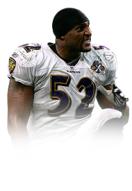 Into NFL Betting? Know what you should be taking into account if the weather’s crap? Check out this posting on the latest betting tips and advice from the team at Bodog Sport.
While it’s important to get a handle on every factor affecting your bet, there’s no angle square NFL bettors overvalue more than weather. This is especially true when the season starts getting long in the tooth as snow, freezing rain, and high winds start changing the way the game is played on the field.
Don’t get me wrong – weather does matter – it’s just you shouldn’t overreact and rush to the window every time a flurry might fall on Ben Roethlisberger’s helmet. Oddsmakers and sharps are both expecting you to overreact so they can take advantage of the public money that inevitably moves the line or total in one direction or another for no good reason.
Make sure to handicap the game the same way you normally would. Don’t automatically take the under or bet on the “cold weather team” just because there’s a chance of snow, especially if you notice the number is already on the move.
Get an actual weather forecast from a local news station or a meteorologist. Suzy Kolber and Sal Paolantonio aren’t your regular Brick Tamland; the mainstream sports media often plays up cold weather to create a narrative prior to kickoff. Tune in to Channel 6 for an unbiased view of the weather unless you live in Wisconsin, where the weather report will most definitely focus on the Packers game.
Don’t overestimate the effect winter weather has on the offensive side of the football while completely ignoring what it means for the defense. Public bettors often make this error, forgetting it’s the defense that has to react to the offense. Defenses that have the most trouble in winter weather are units that like to confuse the offense by blitzing often and running multiple quasi-zone formations. Those teams live and die by their ability to adjust on the fly to what the offense is doing.
NFL betting in the Bodog Sportsbook.
That having been said, it’s still about what the offense can do. A common misconception is NFL teams have no choice but to pound the run in inclement winter weather, so a good running game is the key to making money for bettors. While that’s true if you’re looking at an outright blizzard, teams with offensive balance have better success in winter weather because of their ability to keep the defense honest.
Defensive strategy during cold weather is to take something away from the offense, preferably the run. Teams that go either way are more dangerous because they disallow the defense from focusing on either the run or the pass. This is basic stuff, but it’s even more of a factor when players are losing their footing and the wind is blowing passes down left and right.
Balance on offense isn’t the only thing on which to hang your hat. You have to couple that approach with a team that is actually profitable. Teams fitting the mold (balanced and profitable) this season are the New York Giants, Tennessee Titans, and Washington Redskins: All figure to be solid plays when Mother Nature rears its winter head.
Looking at stadiums most affected by cold weather, there are no hard and fast trends that deliver a magic bullet. That’s because the role of the oddsmaker isn’t to accurately reflect the differences between opponents in the spread or total, it’s to accurately assess public perception of those differences. If squares think bad weather means the game is going under, that’s where the number is headed.
You could fund an entire college research department figuring out the cold weather trends in NFL stadiums. Taking a small extrapolation of games played in December or later in Green Bay, Cleveland, and Buffalo since 2005, nothing jumps out except the over trend. The Packers, Browns, and Bills are a combined 17-6 O/U during those circumstances over the time period, meaning there’s at least some benefit to avoid pounding the under at all costs when cold weather strikes.
 For more on popular US-friendly online sportsbook Bodog, check out the latest Bodog review onsite at BookieLabRat.com or compare Bodog with the other two most popular, safe offshore sportsbooks for American bettors.
November 28th, 2008
 Here’s the latest betting strategy update from the team at Bodog Sportsbook.
Perhaps you’ve heard that old chestnut about the wheat and the chessboard. Long story short, put one grain of wheat on the first square, two on the second, four on the third, and keep doubling that amount until all 64 squares are covered. How many grains of wheat is that? 18,446,744,073,709,551,615. Even if you made the Earth a giant wheat farm, it would take 80 years to harvest that much grain.
That’s the power of parlays. Of course, your chances of picking 64 correct games out of 64 is frightfully small: (that number up there) to 1. So let’s start smaller. Let’s say you’re looking at this week’s NFL matchup between the Baltimore Ravens and the Cleveland Browns, and let’s say you like both the Ravens (+1.5) and the under on the total of 36.5 points (For current lines, see Bodoglife.com). You could wager $110 on each of them separately for a potential profit of $200, or you could place a single $110 parlay bet and earn $286 if both the Ravens and the under cash in. You pay half as much, and you win more.
You’ll already have noticed that’s $286 and not $330 on odds of 3-1. That factors in the juice the book collects for processing the bet. Every 2-team parlay (where the juice is –110 on each item in the parlay) is given odds of 2.6-1. Here is the full “fixed odds” list:
2-team 2.6-1
3-team 6-1
4-team 12-1
5-team 25-1
6-team 35-1
7-team 75-1
8-team 100-1
9-team 150-1
10-team 300-1
11-team 450-1
12-team 600-1
As you can see, those payouts can get pretty big – up to a maximum of $100,000. The more teams you parlay, the higher the risk and the juice as well as the payout. You can put together any combination of football and basketball games, using both pointspreads and totals.
There are a few simple things to know about parlays before making the plunge. The first is that every team in the parlay has to win to get paid. Four out of five is not good enough. However, if there is a push, that team gets taken out of the equation. Let’s say you have a 3-team parlay where one of the games ended in a push. That game is removed, and you proceed with your remaining 2-team parlay at 2.6-1 odds. If you started with a 2-team parlay and you get a push, the other team is treated as if it were an ordinary straight bet instead.
Get in on parlay betting with Bodog online sports betting.
An easy parlay strategy that many sharps employ is to bet the pointspread and the total on the same game, as we did in the above example. One important benefit is that you’re studying almost entirely the same handicapping information, so it’s a major timesaver – there’s a reason why they say time is money. You can also expect the underdog to have a better chance of covering if the score is low, particularly if the favorite is laying a ton of points. The underdog-under and favorite-over parlays are value bets following this line of reasoning. (Please note, however, that Bodog does not take action on correlated parlays.)
We’re into parlays so much that we’re pleased to be holding a special Parlay Promotion contest that earns you bonus points for all the parlays that you hit, all the way up to the end of the NFL regular season. There are weekly prizes available for the bettors who rack up the most points, and the more teams you parlay at once, the more points you get. Make sure to visit bodoglife.com to check out the rules and regulations, as well as the prizes you can win.
TAGS: Sports Betting Strategies
CHECK OUT:
>>The latest sportsbook review on what’s hot and not about Bodog Sports here at BookieLabRat.com
>>Compare Bodog to JustBet and Bookmaker.com, the other two online sports betting sites that offer safe, secure betting services to bettors from around the world including Americans.
October 30th, 2008
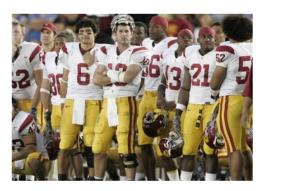 Last week’s USC-Washington State matchup was one for the history books. The Trojans were 42.5-point away favorites, the highest spread USC has faced on the road since Pete Carroll took over the program. That was enough chalk to send bettors scurrying to Washington State’s side.
Whoops. The Trojans won 69-0, improving to 5-1 SU and a healthy 4-2 ATS. But dealing with giant chalk is old hat for USC. This team has been favored by double-digits in every game this season. They don’t always cover – in fact, the Trojans have suffered some high-profile losses over the past couple of years to Stanford (+39) and Oregon State (+24). But USC gets the job done more often than not at 20-12 ATS in the Carroll Era when favored by at least 20 points.
These massive spreads are becoming more and more common. There was only one such occurrence in Carroll’s first two years at the helm, then six in 2003 as the program won the first of two back-to-back national championships. But the Trojans aren’t the only team finding itself laying three touchdowns or more on a regular basis. The Texas Longhorns are 7-0 SU and ATS this year; their first four games were all blowouts with no spread lower than 23. Penn State just beat Michigan (+24.5) by a 46-17 score.
These mismatches are great value opportunities for chalkeaters. Handicapping becomes less of an exact science the higher the spread gets. Casual bettors flee from these situations, or worse, take the underdog and the points. Some underdogs are better than others, of course, but simply hammering every team at –20 or higher would have earned you big bucks this year at 49-34-2 ATS.
Check out the college football spreads in the Bodog online sportsbook.
The higher the chalk gets, the more risk-averse bettors become. There are even many sharps who will avoid going too far into the deep end, preferring to sift carefully through the underdogs for value. However, it is exactly this risk aversion that makes the market so soft at the extreme. The books have to put a lid on the chalk at some point just to get people to support the favorite. And while laying 42.5 points to Washington State may appear risky, it’s actually a lot safer than being a small fave against a competitive team, which the Cougars most certainly are not.
The best time to use this strategy is during the opening three weeks, when most of the alpha males in the FBS are playing “cupcake” opponents in non-conference action. Many of these games won’t even have a betting line because the opponent in question is from the FCS, the former Division I-AA. But there are plenty of FCS-quality teams in the lower conferences. Arizona (-26.5) got to play the lowly Idaho Vandals from the WAC in the season opener and crushed them 70-0. In all, teams laying 20 points or more went 22-12-2 ATS through the first three weeks of the 2008 campaign.
It’s been a yo-yo ride since then, although the –20 Crew remains 27-22 ATS over the past five weeks. Markets tend to tighten as more and more football gets played and the public gets a better handle on how good these teams actually are. As well, you’ll find more occasions (especially in early conference play) where the underdog will play with a lot more passion than during the non-con portion of the schedule. Motivation is a powerful force, and the athletes we’re dealing with are teenagers fighting for school and personal pride. Weeding out these scenarios ahead of time will help keep your investment in chalk from turning sour.
 For more on Bodog online sportsbook check out the latest reviews onsite at:
>>Bodog Sport Bookmaker Review (BookieLabRat.com)
>>Review and Rating of Bodog Sportsbook (GoonersGuide.com)
>>Compare Bodog to other popular offshore online sportsbooks that accept American bettors
October 24th, 2008
 Open a number of bookie accounts to make sure you grab the best price.
Whatever you do, take the best price available on all bets – not just what’s easiest!
So many people bet for convenience – there’s a sports bookmaker just three minutes walk down the road or they have money in a particular online bookie account, or even worse, they just like to play with a bookmaker’s latest mobile betting gizmo – and so they place their wagers with the same firm every time.
That’s a mug’s game! Say you fancy €100 on Liverpool to win at 5/6 (1/83). They might be available at 11/10 (2.10) elsewhere, but you can’t be arsed opening a new account. Liverpool win – and you collect your €83 winnings, while someone else gets €110 for the same outlay. What are you doing?
Unless you take value bets, you’ll lose out in the long run. Successful, profitable sports betting is all about placing winning wagers at the best value odds you can find – and with a bookie you can trust to pay you out. Always.
 To make it easy we assess hundreds of online sportsbooks each month and select the top 20 or so we consider “stand out”. Check out the detailed reviews and ratings on site at BookieLabRat.com
December 28th, 2007
Want to play more profitable blackjack? Sports bettors often make great Blackjack players as it’s a game involving backing the odds and decision making.
There are 3 standard approaches to Blackjack play
- just “having a stab” or following your gut (not recommended)
- card counting (not great to do online and if you’re caught doing it at a casino you’ll get to meet “the gorillas from under the stairs”)
- following basic Blackjack Strategy (a scientifically devised method tested by computers over billions of hand combinations to improve your chances of winning)
Check out these 3 Blackjack articles to increase your chances of beating the casino odds!
Part I: An Introduction, the 3 standard approaches to Blackjack Play and the things to look for when chosing which Blackjack game to play.
Part II: Tried and tested Blackjack Basic Blackjack Strategy
Part III: What to do with Soft hands and pairs in Blackjack to improve your winnings
October 29th, 2007
 As the Premiership season progresses, football bettors might benefit from reassessing their approach to gambling on the English top flight. In recent seasons Arsenal, Chelsea, Liverpool and Man Utd (‘the big four’) have widened the gap between themselves and the rest of the league as their financial strength has allowed them to consolidate their power, particularly at home.
Asian Handicapping is the natural antidote for the increasingly prevalence of one-sided football contests (for example a string of home game wins). Asian Handicaps level the playing field via a hypothetical goal bias, giving bettors the opportunity of backing Arsenal at better than even money at home to newly promoted Derby for example.
Asian Handicaps Explained
An Asian Handicap is a method of betting on soccer that eliminates the possibility of losing if a game ends in a draw after 90 minutes. Teams are ‘handicapped’ to offset any perceived difference in abilities, using a spread based on goal superiority which eliminates the tie.
There are three basic types of Asian Handicaps:
Level Handicap
Where there is no perceived difference in abilities between Team A and Team B, no handicap bias is assigned, and both start off (0) also known as pk, pick’em or scratch. To win a bet on either team, all the bettor must do is identify the team which scores more goals than their opponent; all bets are refunded on the tie.
Single Handicap
Where there is a perceived difference in abilities between Team A and Team B, the superior team will be given an appropriate goal handicap to level the playing field for betting purposes i.e. -0.5 goal, -1 goal, -1.5 goals etc.
For example, if you bet on Team A with a handicap of -1 goal, they must win by more than one goal to cover their handicap and for you to win your bet. If they only win by a goal, the result with the handicap applied is a draw for betting purposes, so your bet is refunded. If Team B draw or win, you will lose your bet on Team A.
Double or Split Handicap
Where the difference in two teams’ abilities is slight, split ball Asian Handicaps may be used splitting the stake into two separate bets. For example Team A might be offered (pk & -0.5). If you bet on Team A and they lose, you will lose both bets as they did not cover either handicap. If the match ends in a draw, half of your stake at (pk) will be refunded, and the other half at (-0.5) will lose. If Team A wins, both handicaps will be covered so both bets win.
KEY POINT: If you’re stuck in the past slavishly following three-way fixed odds betting, the chances are you’re not getting a decent return on your outlay, and your gambling might benefit from the fresh perspective that Asian Handicapping provides.
–Hobbes
 One of the leading Internet bookmakers, PinnacleSports.com, is a market leader in Asian Handicap betting with 1.96/1.96 style pricing. Find out more about PinnacleSports in a detailed sportsbook review – remember having active accounts and your betting bankroll distributed across multiple bookies is also key to maximising your profits from sports betting.
Compare the best odds live across top rated online sportsbooks here at BookieLabRat.com
October 11th, 2007
Previous Posts